
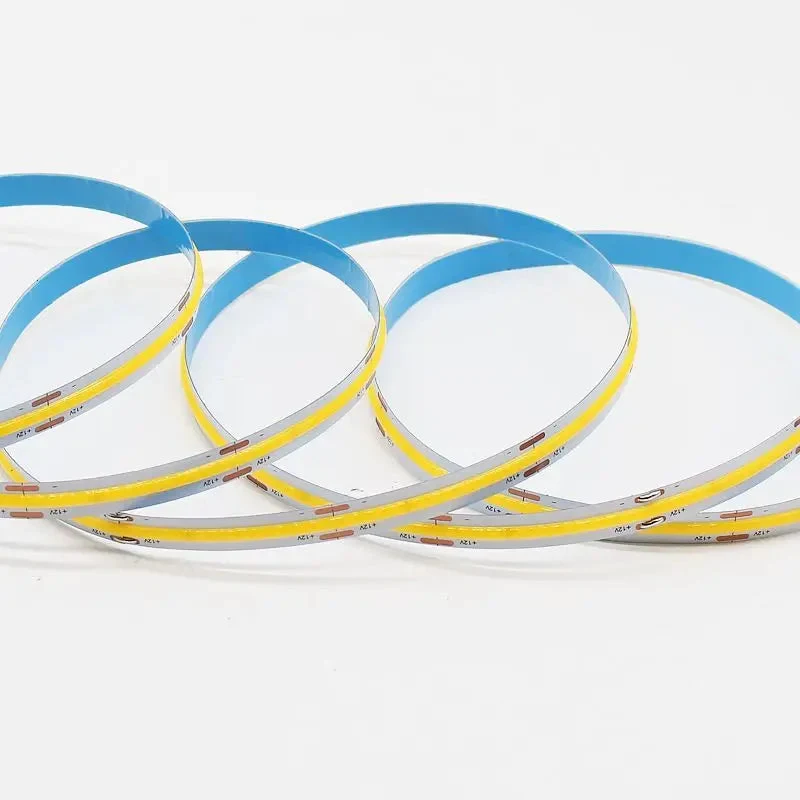
The COB vs SMD LED strip decision can start with light appearance. COB and SMD LED strips can both work in a lighting assembly. The practical difference is the visible light source: a COB strip typically presents a more continuous luminous surface, while an SMD strip uses separate LED packages that may appear as individual points. Neither format is automatically brighter, more efficient or more durable. Choose between them by checking the viewing distance, diffuser, available profile space, electrical requirements and the appearance of a real sample in the intended installation.
Quick decision: Start with COB if a shallow or directly viewed detail needs a smooth line. Keep SMD in consideration if the strip is concealed, the diffuser can blend its light points, or a particular SMD configuration matches the electrical and optical brief. Confirm the result with the complete assembly, not a bare-strip photograph.
What Changes Between COB and SMD?
COB means chip on board. In a flexible COB strip, closely placed LED chips sit on the circuit board beneath a continuous light-converting layer. This makes the emitting surface look more unified.
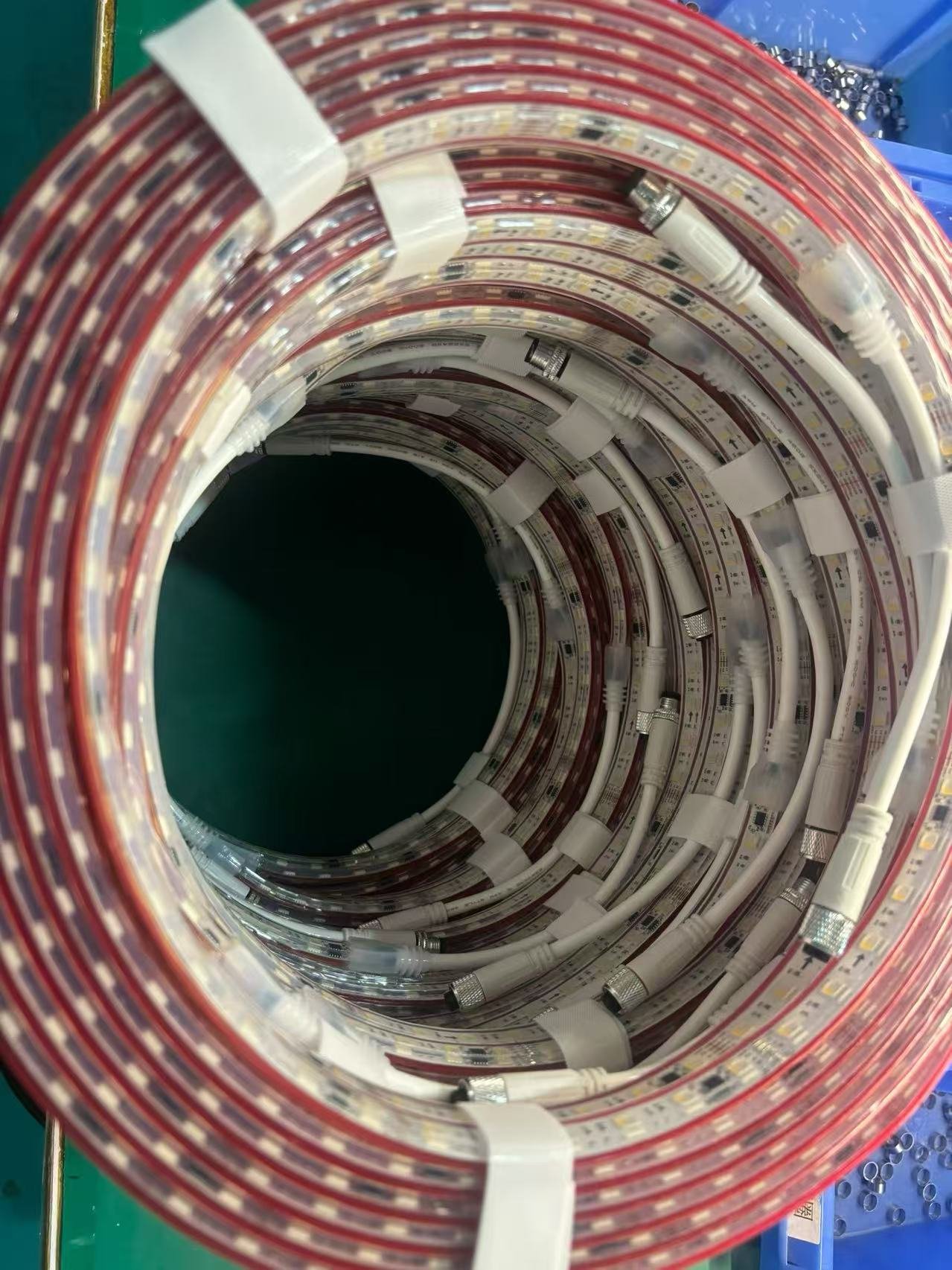
SMD means surface-mounted device. An SMD strip places individual packaged LEDs along the circuit board. Their spacing, package type and the optical system around them influence whether separate light points remain visible.
The terms describe construction, not a complete performance specification. A COB label alone does not establish output, color quality, electrical limits or environmental protection; the same is true of an SMD label.
COB vs SMD LED Strip at a Glance
| Selection question | COB strip | SMD strip | What to check in your project |
|---|---|---|---|
| How does the bare strip look? | More continuous luminous surface | Separate LED packages | View a powered sample from the real viewing position. |
| Will dots show through the cover? | Usually easier to blend | Depends strongly on spacing, cover and distance | Test the actual diffuser and profile depth. |
| Does the strip fit? | Check board width and coating height | Check board width and component height | Measure the internal channel and connection space. |
| Which is brighter or more efficient? | Model-specific | Model-specific | Compare the quoted product data under comparable test conditions. |
| Which electrical arrangement works? | Model-specific | Model-specific | Match the selected strip, driver, control and run length. |
| Which costs less in the finished assembly? | Depends on strip and optical parts | Depends on strip and optical parts | Compare the complete assembly, not strip price alone. |
When a Smooth Light Line Matters
COB is often worth testing first when the luminous line itself is visible: a shelf edge, furniture detail, short cove, display case or exposed architectural feature. Its continuous-looking surface can reduce the optical work required to blend separate points. It does not eliminate the need to review diffusion, glare, light direction or the installed appearance.
SMD can still produce a clean result. Increasing the distance between the LEDs and diffuser, choosing a suitable cover, or moving the light source away from direct view can change the result substantially. A deeply recessed SMD installation may look more uniform than a poorly integrated COB installation. The meaningful comparison is the finished light line at the intended viewing distance.
If the project uses a silicone profile, assess the LED strip and the profile together. The strip's emitting surface, position inside the channel and silicone diffusion all affect the visible result. See the LED Silicone Tubes range for the profile side of that decision.
Do Not Choose by Brightness or Efficiency Claims Alone
It is tempting to say that COB is always brighter, or that SMD is always more efficient. Neither statement is reliable across different strip models. LED package, drive level, board design, thermal conditions and diffuser losses can all change the comparison.
Request data for the exact variants being considered. Where output matters, compare measured light output and power at the same operating condition. Where color matters, confirm the selected color temperature and color-rendering requirements. Do not substitute a technology label for the model's data sheet or an approved sample.
Thermal management also belongs to the complete installation. Confirm the proposed mounting surface, enclosure, ventilation and operating requirements for the chosen strip. Never assume a silicone tube or a visual cover acts as a heat sink.
Fit, Connections and Installation
Before selecting either format, check the usable space inside the profile or housing. The board may fit while a connector, cable exit or taller component does not. A plan based only on nominal strip width can miss the actual assembly constraint.
Review these points with the intended supplier and installer:
- Visible outcome: Is the line viewed directly, through a diffuser or only as reflected light?
- Internal fit: What are the usable channel width, depth and available space at joints and ends?
- Electrical design: Which supply voltage, control arrangement and run length are specified for the selected model?
- Connections: Where will the strip be cut, joined and routed to power?
- Environment: What exposure and complete-assembly protection are required?
- Sample acceptance: At what viewing distance and operating condition will the light line be approved?
For joining and connector checks, use the LED strip connection guide. Do not assume a connector fits simply because it is labeled for COB or SMD.
Which Format Should You Ask to Sample?
Sample COB first when close viewing, a shallow detail or a prominent continuous light line is the main concern. Sample SMD as well when the light source is hidden, the optical cover has enough depth to blend points, or the requested electrical arrangement points to a specific SMD model. There is no substitute for evaluating both candidates in the intended profile and viewing position when the finish is critical.
AlisterTech supplies COB and SMD LED Strip Lights for lighting integration. Send the installation detail, desired light appearance, available dimensions and any existing electrical equipment through the project request form. The proposed strip and complete assembly can then be reviewed against the actual requirement.
Frequently Asked Questions
Is COB always better than SMD LED strip?
No. COB is a useful starting point for a continuous-looking visible line. An SMD strip may be suitable for concealed or sufficiently diffused installations, or where a particular model meets the project requirements more closely.
Can an SMD strip look continuous?
Yes, depending on LED spacing, diffuser, profile depth and viewing distance. Test the actual assembly rather than judging from the bare strip alone.
Does COB strip still need a diffuser?
Sometimes. The desired finish, glare control and profile design determine whether a diffuser or silicone cover is appropriate. A COB surface does not automatically solve every optical requirement.
Is COB brighter or more energy efficient than SMD?
Not as a general rule. Compare the specified models using their output and power data under comparable operating conditions, including the optical losses of the finished assembly.
Can the same connector be used for both formats?
Do not assume so. Connector fit depends on the actual board width, contact layout, coating, cut position and intended electrical arrangement.
What should I send for a recommendation?
Share a drawing or installation photo, available profile dimensions, viewing distance, target light appearance, strip or driver reference if already selected, environment and estimated quantity.