
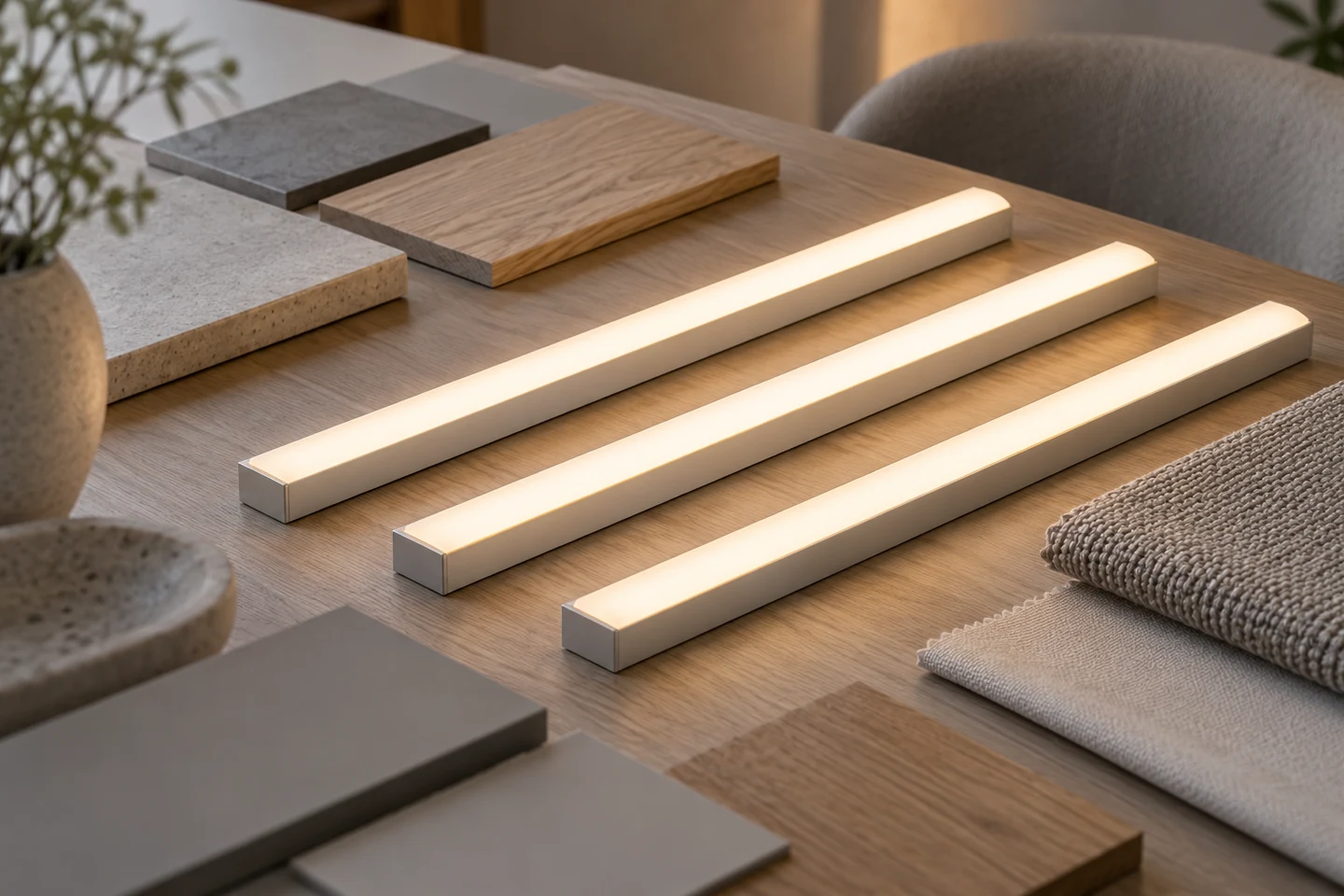
SDCM LED specifications describe a colour-tolerance requirement for white-light sources relative to a defined target. They address how closely light colours match, not how bright the source is or how faithfully it renders merchandise. For adjoining silicone light lines, coordinate the selected source, product configuration, sample and supply batch rather than assuming that the same Kelvin label guarantees a visual match.
Long display lines often involve more than one supplied section. For an AlisterTech enquiry, mark which sections will be seen together and whether you expect later replacement pieces. We can discuss the silicone lighting format, source reference and sample scope with that layout. Use product-specific technical information to request the matching data that matters to the order; the housing shape alone cannot establish colour consistency.
Separate Matching From Colour Temperature and Rendering
| Specification | Question it addresses | What it does not establish |
|---|---|---|
| Nominal CCT | Which white-light appearance is selected? | Exact match between separate sources |
| SDCM / colour tolerance | How tightly is chromaticity controlled around a target? | CRI or lumen output |
| CRI | How does the source render object colours under that metric? | Source-to-source matching |
| Initial sample | What does the reviewed assembly look like now? | Guaranteed lifetime colour stability |
| Batch/reference details | Which supplied configuration is being compared? | A result for an unspecified future replacement |
NVC's technical explanation describes SDCM as a colour-matching measure. A smaller step tolerance generally indicates tighter control around the specified target, but a step number without the target, measurement basis and configuration is not a complete purchase specification. Avoid a universal promise that a particular number is invisible to every observer in every installation.
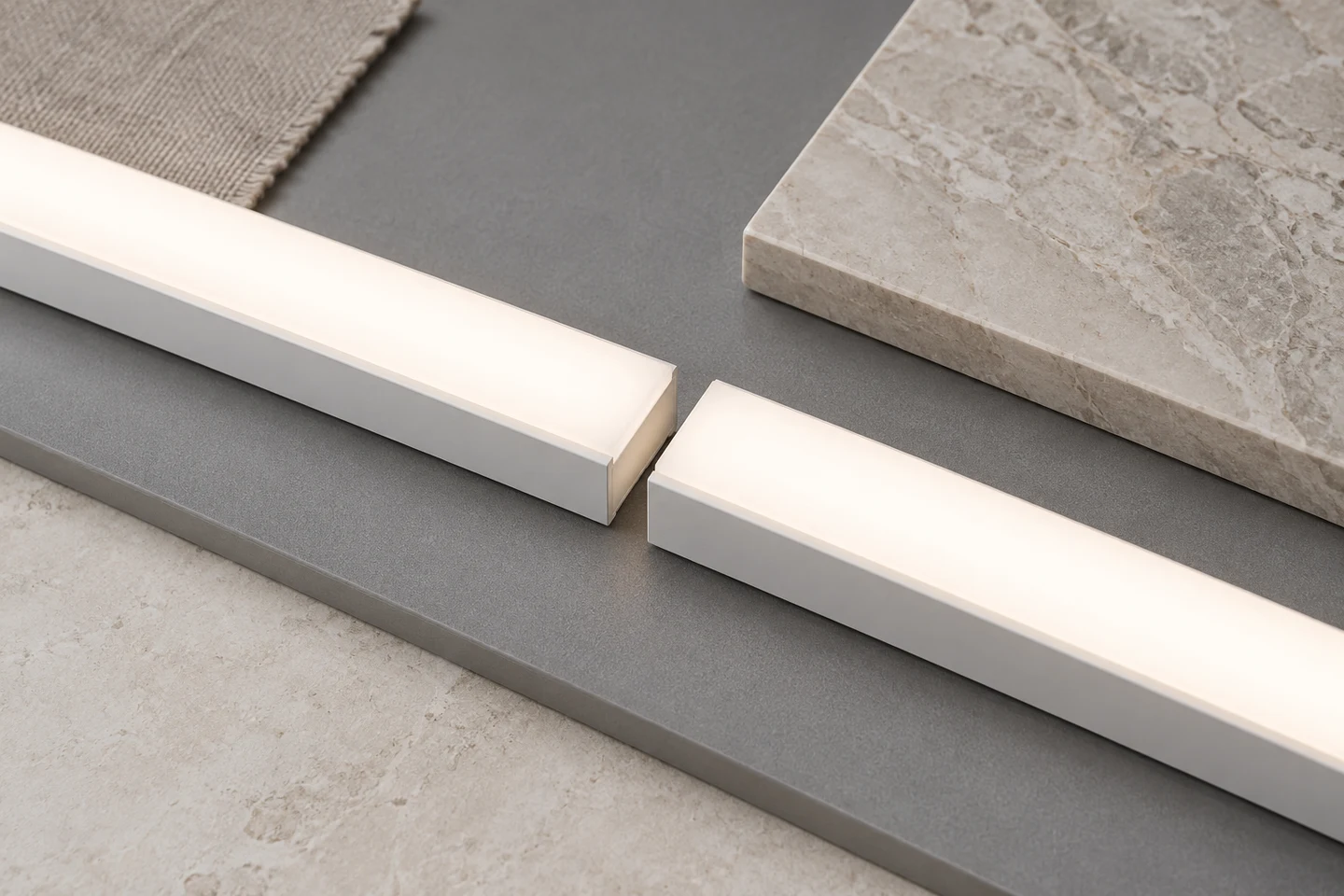
Plan Adjoining Runs and Later Replacements
Mark which light lines will be viewed together: parallel ceiling details, connected cabinet sections or adjacent retail displays. Record the chosen model, source option and nominal CCT, then ask what matching data and batch information can be provided. A separately sourced replacement may need another review even when its label shows the same colour temperature.
Use the 2700K vs 3000K guide for nominal warmth and CRI 80 vs 90 for rendering. Neither substitutes for the colour-matching requirement. Keep the installation and sample approval conditions comparable when evaluating adjoining sections.
Specify the Source and Complete Profile Assembly
An empty silicone tube is not a light source with its own SDCM rating. For a separate strip, request source-specific data and review it inside the intended housing. For finished LED Neon Flex, ask which exact white-light configuration the matching specification covers. Do not apply it to RGB or Pixel variants without the relevant basis.
This guide does not claim that every AlisterTech model meets a particular SDCM step. Request the requirement and confirm availability and supporting evidence for the quoted product. The silicone surface and installation can affect the viewed appearance, so test the complete representative assembly as well as reviewing source data.
Distinguish Initial Matching From Colour Stability
An initial match does not establish how colour will change over time. The US Department of Energy colour-stability presentation discusses colour stability as a separate consideration. If stability matters, specify the applicable conditions, duration and required evidence rather than extending an initial tolerance into a lifetime guarantee.
AlisterTech's Manufacturing, Quality Control and Custom Extrusion pages provide the development and approval context. Use Technical Resources to request relevant files. Send the adjoining-run drawing, CCT, matching requirement, model/source, replacement needs and quantity through Contact or RFQ.
Frequently Asked Questions
Does the same CCT guarantee matching light lines?
No. A nominal Kelvin label does not specify every source chromaticity. Request the matching requirement and review adjoining sections in the intended assembly.
Is a lower SDCM step generally a tighter tolerance?
Yes, around the defined target and on the stated basis. Confirm the target, configuration and supporting data rather than buying on the step number alone.
Does CRI describe colour consistency between strips?
No. CRI concerns object-colour rendering under its metric. Source-to-source matching is a different requirement.
Does AlisterTech guarantee a fixed SDCM for every model?
Specify the matching level you need. Ask for data for the quoted source or finished configuration rather than assuming the same SDCM applies to every model.
How do I specify colour matching for adjacent sections and later orders?
Mark the sections that will be visible together and state any matching requirement for the quoted light source. Retain the approved source and sample references for later enquiries. The same nominal CCT does not establish the same SDCM or a match between unrelated batches; request the applicable evidence with your lighting enquiry.

Order Adjoining Light Lines With a Clear Matching Brief
Mark the runs that must match, give the selected white-light reference and expected quantities, and describe any later replacement need. Include the profile and connection arrangement in the enquiry.
Application illustration.