
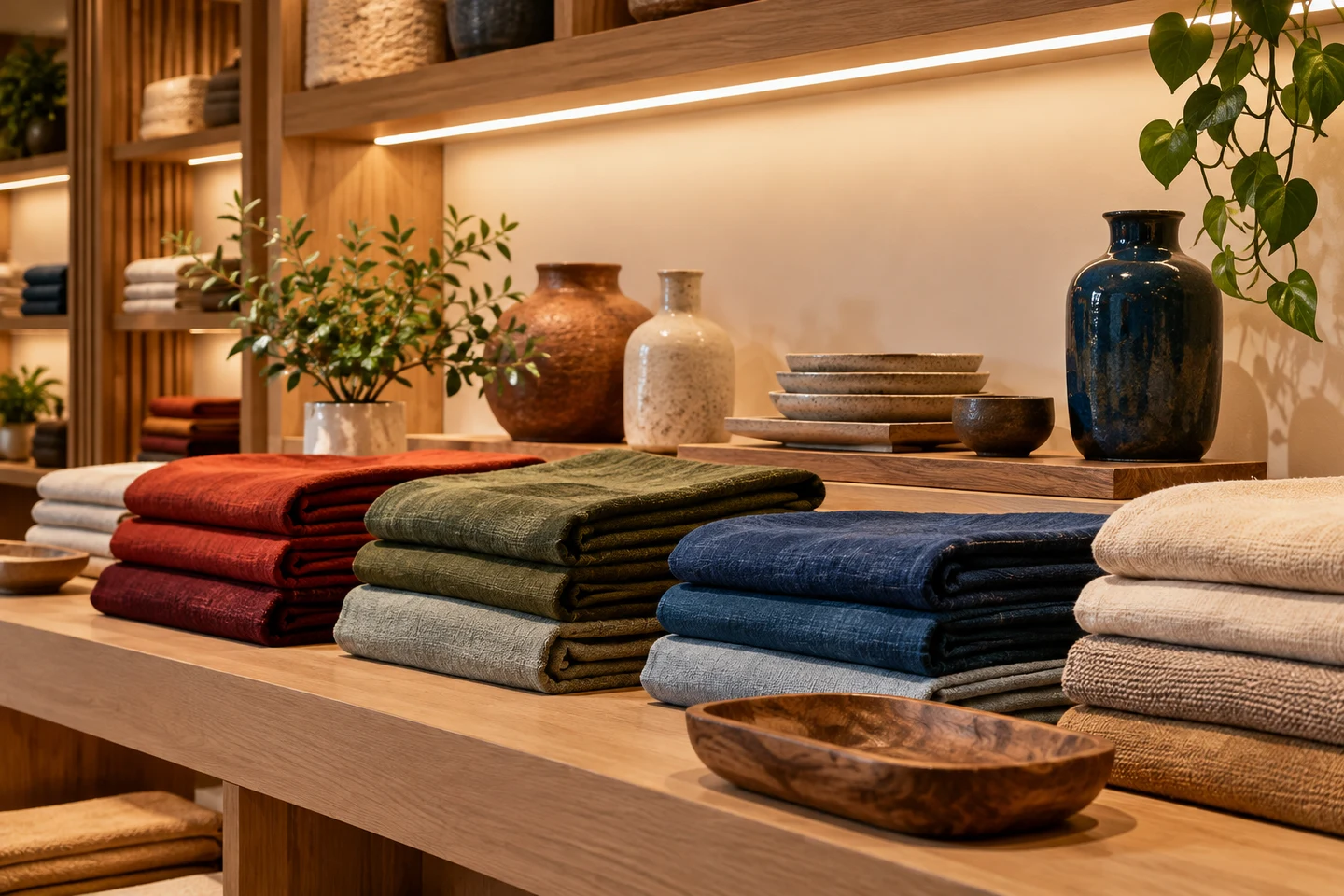
CRI 80 vs 90 is a colour-fidelity comparison, not a brightness comparison or a percentage of colours that a lamp reproduces correctly. A higher general CRI indicates closer average rendering to the applicable reference under that metric. For retail, furniture and architectural lighting, use it as one specification alongside CCT, output, physical fit and a representative sample.
A colour-rendering requirement is most useful when tied to the product you will buy. AlisterTech can discuss the silicone profile, selected white-light source and representative sample together. In our furniture showroom project, a customer’s rendering led to a physical sample and silicone LED strip supply. For your display, identify the fabrics, finishes or merchandise that matter, and request the relevant source data with the quotation.
Know What the CRI Number Does and Does Not Describe
| Specification | Buyer meaning | What it does not establish |
|---|---|---|
| General CRI / Ra | Average colour fidelity using the metric's standard samples | Every individual colour's appearance |
| CCT | White-light colour appearance | CRI, brightness or operating temperature |
| Light output | Amount of emitted light in the specified data | Colour fidelity |
| R9, where available | Supplemental saturated-red rendering information | A substitute for all colour metrics |
| Complete sample | Appearance with the intended source, profile and materials | An independent laboratory test report |
The Department of Energy's LED basics explains that CRI has limitations, including saturated-red prediction, and that R9 is often used as supplemental information. Do not describe CRI 90 as 90% colour accuracy or assume a strong red-rendering result from the general number alone.

Review the Materials That Matter to the Buyer
For retail displays, identify the merchandise colours and finish. For furniture lighting, include timber, stone, paint and textiles. Review the actual materials with comparable CCT, mounting and light levels so the sample is useful for approval.
Higher CRI is not a promise of higher brightness, lower power or an automatically preferable visual effect for every task. If colour decisions are critical, state the required metric and request the applicable test information. Images on this page illustrate sample review only; they are not measured CRI 80/90 comparisons.
Ask for the Exact Product Configuration
In an empty silicone housing, the selected strip provides the lighting source. The housing is not itself a CRI-rated lamp. Select the source and check strip-to-profile fit before reviewing the powered appearance.
For a finished LED Neon Flex configuration, quote the exact row and request clarification of any alternative CRI notation. A value listed for a white-light option must not be copied to a separate RGB or Pixel option. A slash or missing value is not evidence that the configuration meets CRI 80 or 90.
Confirm the Measurement and Approval Scope
Ask which source/configuration and operating arrangement the measurement describes. If you need R9 or another colour metric, request it rather than assuming that every catalogue row includes it. AlisterTech's Quality Control page describes product-specific measurement requirements; it does not state that every profile or assembly receives the same test scope.
Use Manufacturing and Custom Extrusion to review the assembly and approved basis. Technical Resources provides applicable files. Send the CRI requirement, CCT, source/model, material sample, installation and quantity through Contact or RFQ. Ask the quotation to identify which performance requirement applies to the selected configuration.
When the Project Calls for a TM-30 Lighting Report
A TM-30 lighting report gives more colour-rendering information than a single CRI number. Rf describes average colour fidelity to a reference illuminant; Rg describes average gamut area. They are different measures, and a higher number is not automatically a better choice for every display. The IES explanation of TM-30 measures also shows why hue-specific information matters when judging merchandise colours.
Before accepting a report for a quotation, check the source or product identifier, white-light CCT, tested configuration, operating conditions, report date and method version. Ask whether the record describes the LED source alone or the finished assembly. A report for another LED or colour option does not establish the performance of the quoted item.
State the colour-rendering criteria your lighting specification requires, and request the available supporting file for that exact configuration through Technical Resources. AlisterTech does not represent every profile or catalogue option as having a TM-30 report. If the required evidence is unavailable, confirm a measurement and sample-review plan before order approval; do not replace the missing report with a CRI label.
Frequently Asked Questions
Does CRI 90 mean 90% colour accuracy?
No. General CRI is a colour-fidelity metric, not a percentage of correctly reproduced colours.
Does higher CRI guarantee higher brightness?
No. Colour fidelity and output are different specifications. Compare both for the selected source and assembly.
Is R9 included automatically in a CRI figure?
General CRI does not establish the individual R9 value. Request supplemental red-rendering data where it matters and is available.
Can a white-light CRI value be used for an RGB variant?
Request CRI data for the exact white-light configuration being quoted. Values listed for another colour or source option do not establish the performance of your order.
What should a CRI requirement include in a supplier enquiry?
State the required CRI for the exact white-light source being quoted and any additional colour-rendering information your project requires. Include the intended CCT, material being lit and sample review conditions. Ask which technical documents apply to that configuration rather than accepting a value taken from another variant.
Request a Lighting Sample Around Your Merchandise
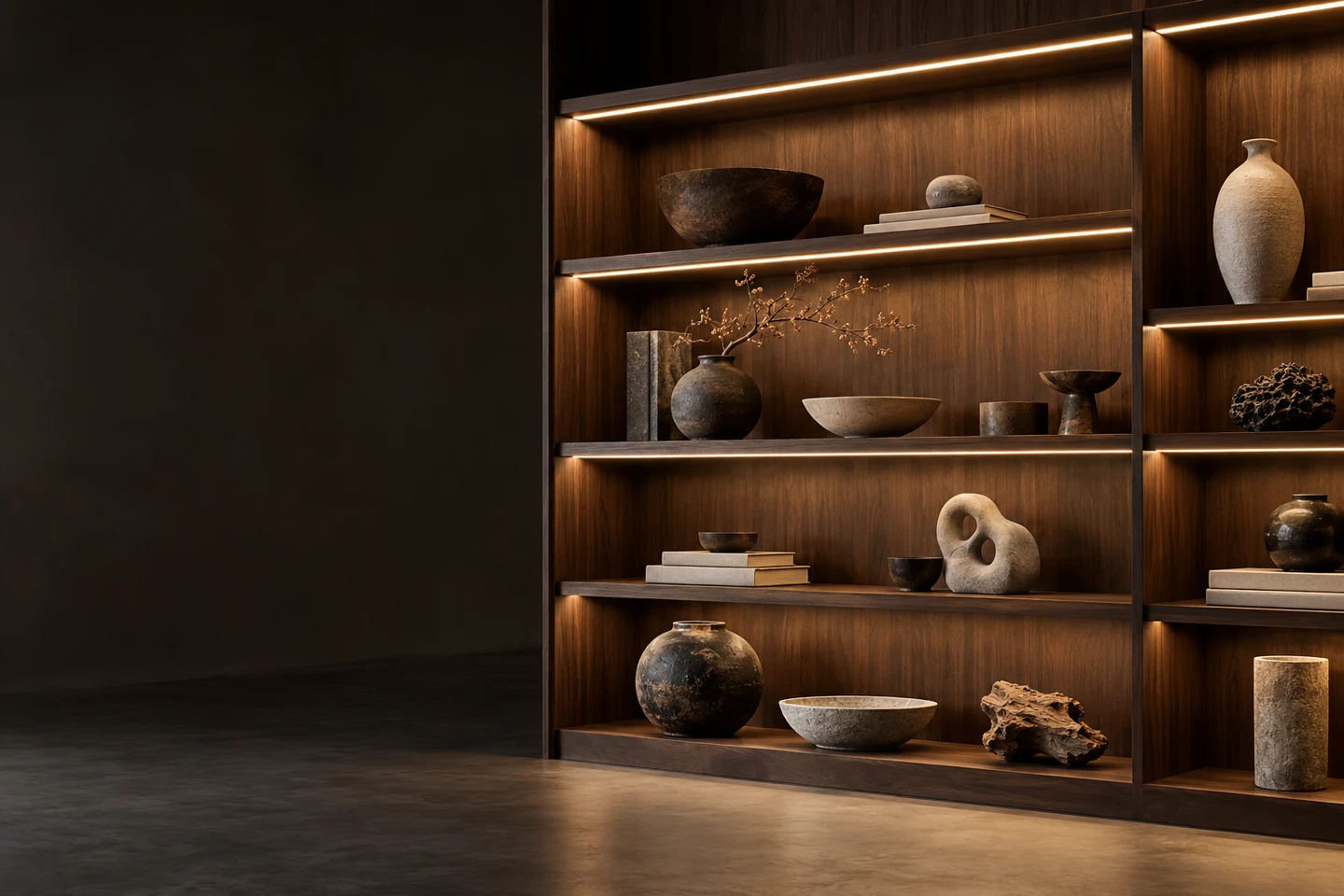
Tell us which materials must look right, the required CCT and CRI, the available section and the lengths needed. Ask which source data and sample are included in the proposed supply.
Application illustration.