Displays & Cabinets
Plan illuminated shelf edges, translucent inserts and concealed reveals around the merchandise. Review reflections in glazing and leave a route to the wiring after assembly.
Retail display lighting
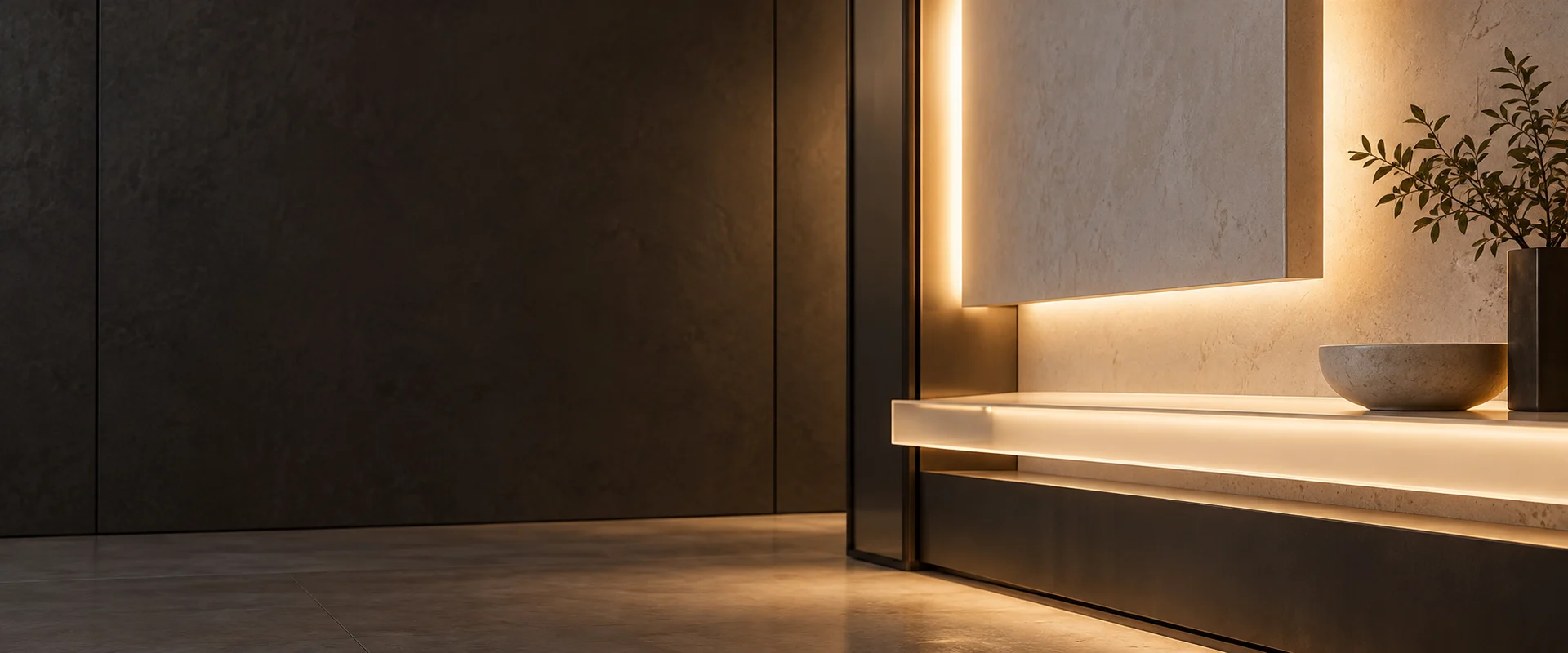
Review the light behind the surface, not only the surface you want to see. Coordinate linear light sources, silicone profiles and installation details around your project.
Behind the Surface
LED backlighting places a light source behind or along the edge of a surface so the surface, outline or surrounding reveal is illuminated. For displays, signage and architectural details, start with the material, viewing distance, available depth and intended effect. Then assess source position, diffusion, reflections, cable exits and service access in a representative sample. AlisterTech reviews linear LED strips, finished neon flex and silicone profile options; a uniform large-area panel may need a different optical system.
Application Details
Plan illuminated shelf edges, translucent inserts and concealed reveals around the merchandise. Review reflections in glazing and leave a route to the wiring after assembly.
Retail display lightingShow the sign depth, face material and the outline to be illuminated. LED signage backlighting is different from a directly visible neon outline; confirm the effect before selecting the source.
Light-source selection for signsCoordinate a backlit reveal or concealed edge with the adjacent material, mounting section and normal view. Ceiling coves are a related indirect-lighting detail with a separate installation review.
Ceiling cove lighting planningSource & Housing
| Product direction | When to review it | What to confirm |
|---|---|---|
| LED strip lights | A separately selected source in a planned recess, edge or housing | Board width, light appearance, mounting, electrical layout and access |
| Finished LED neon flex | A defined flexible light line or concealed illuminated contour | Emitting face, permitted bend, profile size and end connections |
| Silicone tubes and profiles | A housing or diffuser to be combined with the selected strip | Internal fit, emitting surface, material format and installed appearance |
| Custom silicone extrusion | A fixed groove or assembly interface that a standard profile cannot match | Section drawing, essential dimensions, strip, mounting and quantity |
The table describes selection routes, not a promise that one linear strip will uniformly illuminate every panel. Flat light-guide panels, LED sheets and complete light boxes are separate systems; do not assume they are included in a strip or profile quotation.
Diffusion & Viewing
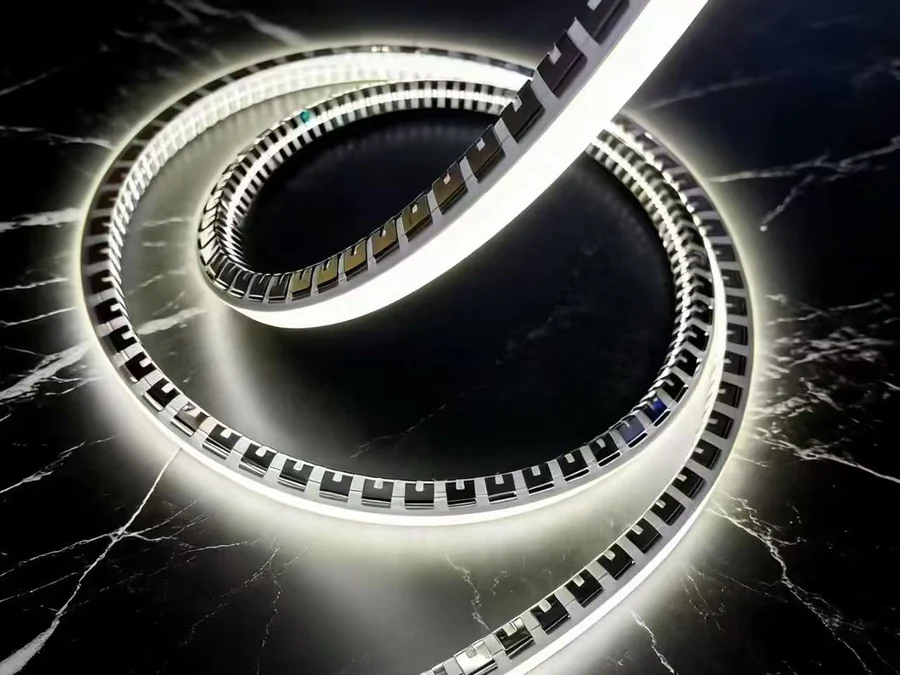
The emitting surface, source spacing, material and available depth influence the visible result. A clear cover, translucent insert and opaque backlit panel need different reviews. Assess reflections and local bright areas from the intended view rather than judging a bare LED photograph.
From Sample to Assembly
A photograph of the finished effect is a useful starting point. Add the section, material and cable route so we can distinguish a visible light line, concealed reveal and surface-backlighting requirement.
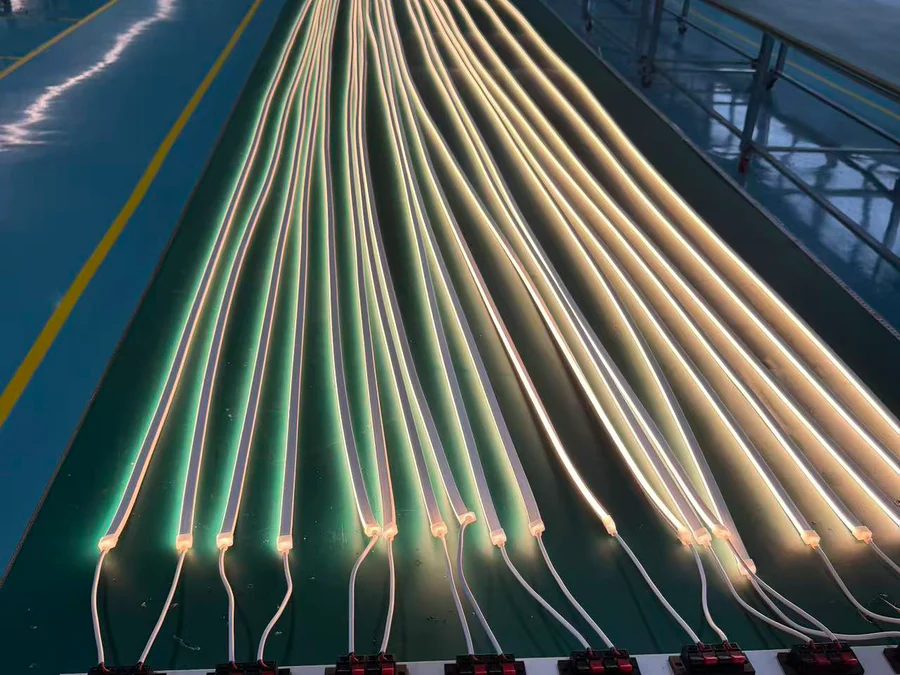
Send the surface photograph, section sketch, desired effect and quantity. We will review the appropriate linear light source and profile scope for your installation.