
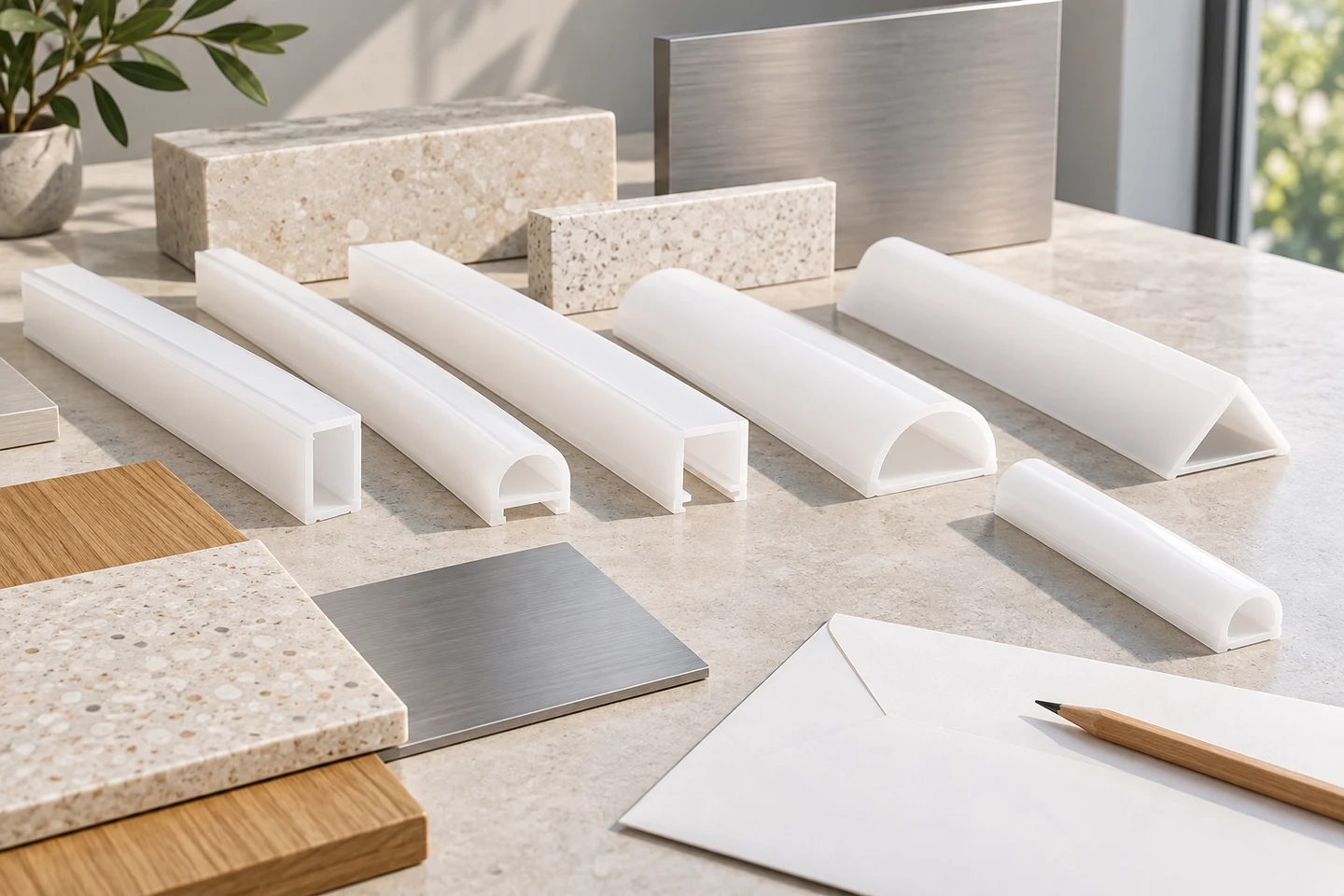
Silicone yellowing is not one universal defect with one universal cause. A construction sealant, LED-chip encapsulant and extruded light-diffusing housing are different products. For an LED silicone profile, identify the selected material and complete installation before agreeing what appearance change is acceptable. The useful purchasing question is which material, exposure conditions and supporting evidence apply to the quoted profile.
When asking AlisterTech for a silicone profile, describe where the visible surface will be used and how appearance will be judged. A custom section discussion can cover the geometry, strip position and material requirements together. Bring any required test method or material document to that discussion. The result should be a clearly defined profile and sample requirement, rather than an open-ended promise that every silicone product stays unchanged in every environment.
Start With the Actual Material and Assembly
An empty LED silicone tube surrounds a separately selected strip. A finished LED Neon Flex product combines its source, housing and terminations. A change in viewed light can involve the source or surroundings as well as the visible housing. Do not identify a cause from a warm-looking photograph alone.
| Requirement | What to include in the purchase brief |
|---|---|
| Material reference | Selected profile and applicable material documentation |
| Appearance basis | Clear or diffusing finish, approved sample and viewing conditions |
| Exposure | Indoor/outdoor location, light, heat, humidity and nearby materials |
| Maintenance | Expected cleaning agents and handling conditions |
| Aging evidence | Test method, specimen, duration, conditions and acceptance criterion |
| Supply identity | Exact product/configuration and relevant batch reference |
Do Not Transfer Claims Between Silicone Applications
Dow's optical-material information describes application-specific silicone technologies for lighting. It does not identify the grade used in an AlisterTech extrusion or establish a shared lifetime. Likewise, sealant advice about a particular curing system must not be applied automatically to a factory-extruded profile or an LED package.
A published study of optical silicone reports results for particular specimens and exposures. Those results are not qualification data for a silicone tube merely because both materials are called silicone. Request evidence whose material and conditions match your selected product; do not extrapolate a test duration into an unsupported number of outdoor service years.
Agree a Meaningful Appearance Review
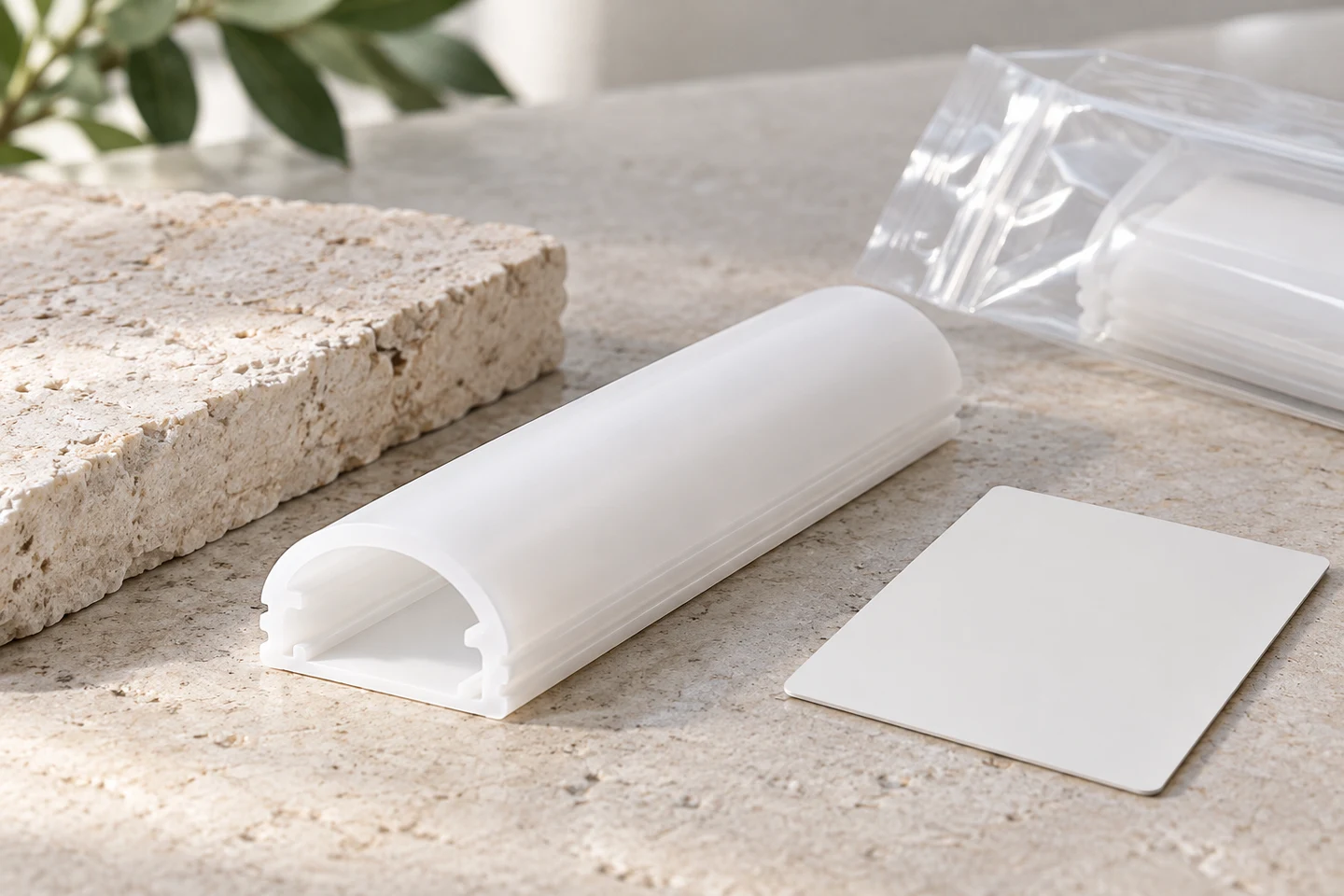
Keep an approved sample and record the lighting, surrounding finish and viewing arrangement used for acceptance. Review the unpowered housing and the representative powered assembly separately. A changed source colour, surface residue or altered surroundings should not automatically be classified as bulk material yellowing.
If you need a quantitative appearance limit, specify the measurement method, reference and acceptance basis with the supplier rather than selecting an arbitrary threshold. Images on this page illustrate sample planning only. They are not before-and-after aging measurements or proof of non-yellowing performance.
Coordinate Thermal, Exposure and Cleaning Requirements
Describe the strip load, mounting support and enclosed space using the heat-dissipation planning guide. A silicone housing is not a replacement for thermal design. Also include sunlight, splash, cleaning chemicals and nearby sealants or coatings where relevant. Do not apply solvents, bleaching or heat treatment as an assumed remedy; request product-specific maintenance guidance.
AlisterTech's Quality Control information allows product-specific appearance and inspection requirements to be discussed. Manufacturing and Custom Extrusion connect these requirements to the approved drawing or sample. No new universal anti-yellowing duration, material-grade identity or certification is established by this guide.
Send the Requirement With the Quotation Request
Use Technical Resources and material documentation to request the relevant supporting files. Send the profile, strip/configuration, exposure, sample needs, appearance criterion and quantity through Contact or RFQ. Ask what supporting claim applies to that quotation rather than extending one generic material statement to every assembly.
Frequently Asked Questions
Does every yellow-looking light line prove silicone degradation?
No. Source colour, residue, surroundings and the housing can affect the viewed appearance. Review the actual assembly and evidence before assigning a cause.
Can a sealant yellowing explanation be used for an extruded profile?
Not automatically. The material formulation, manufacturing process and application can differ. Request information for the actual quoted profile.
Does an accelerated test directly prove a fixed outdoor lifetime?
No automatic conversion should be assumed. Review the method, specimens, conditions, acceptance criterion and relevance to the intended service environment.
What should an anti-yellowing request include?
Describe the exposure, operating and cleaning conditions, required appearance and any specified test or material-document requirement. Send these with the section and LED source information for the silicone profile quotation. Agree the sample and evidence needed for that product; do not treat an accelerated test as an automatic lifetime guarantee.

Specify the Silicone Profile You Want to Order
Send the section, exposure and cleaning conditions, required appearance and any relevant material or test requirement. Ask for a sample and documentation scope for the profile being quoted.
Application illustration.