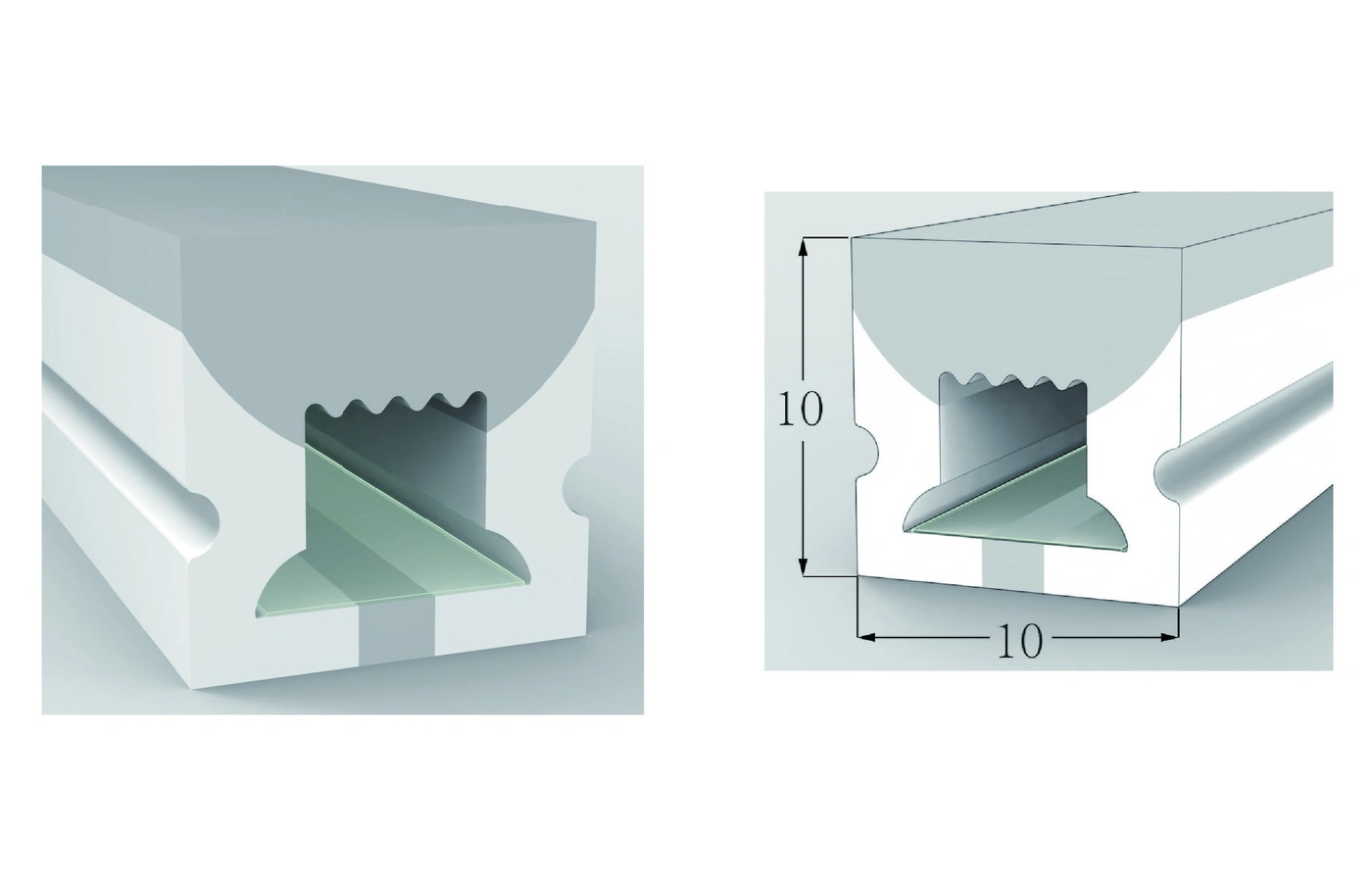
10 x 10 mm
Catalogue page 12, profile 1
Review catalogue row
Top-emitting LED neon flex directs light upward from its emitting face. Start with the profile section that fits the recess or visible line, then select the exact LED configuration for your project.
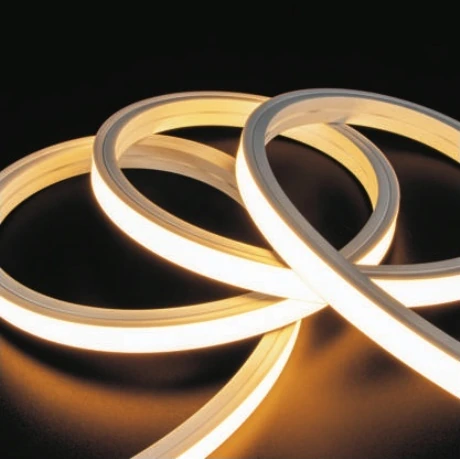
Start with the visible aperture and available width and depth. Position the upward-facing emitting surface toward the intended view or reflected surface. After selecting the profile geometry, compare the individual LED configuration: light colour, density, CRI, cut length, PCB width, voltage, power and finished assembly rating. Review the strip, profile, end treatment and mounting together. A top-emitting face does not, on its own, establish a bending plane or minimum bend radius.
These are representative catalogue sections, not model names created from dimensions. The pictured geometry and the exact electrical configuration are separate parts of selection.
Catalogue page 12, profile 1
Review catalogue row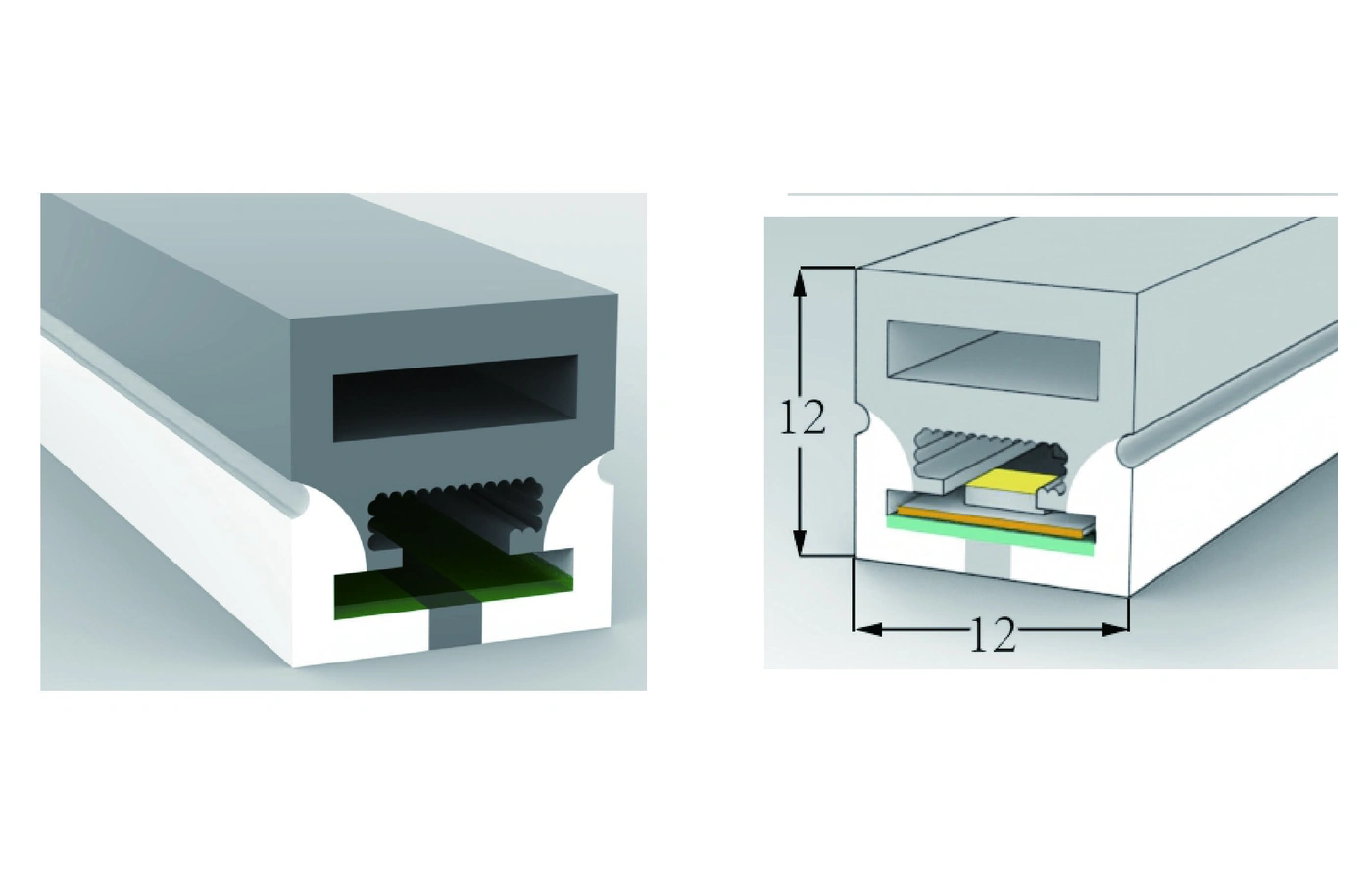
Catalogue page 12, profile 2
Review catalogue row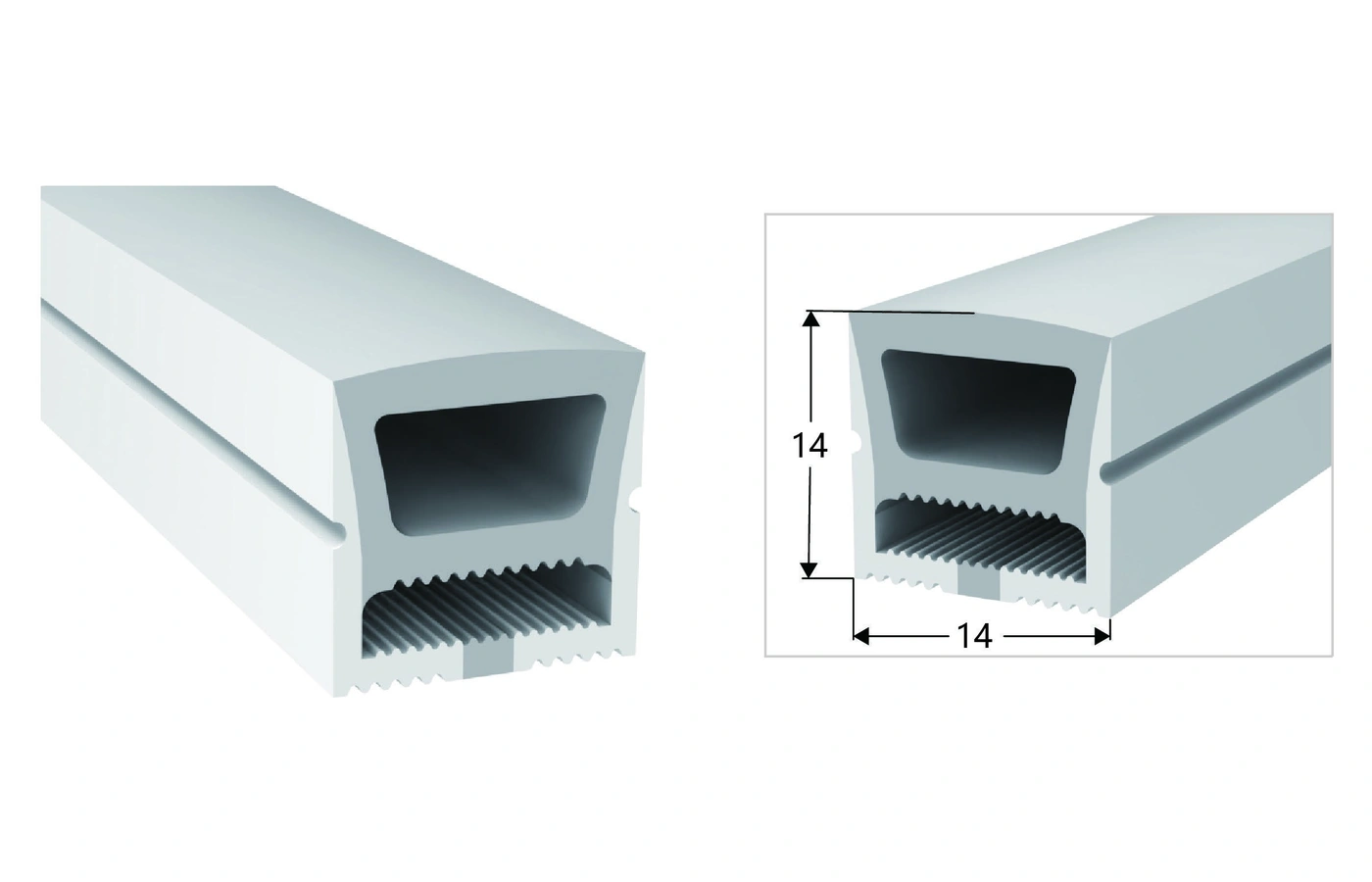
Catalogue page 12, profile 3
Review catalogue row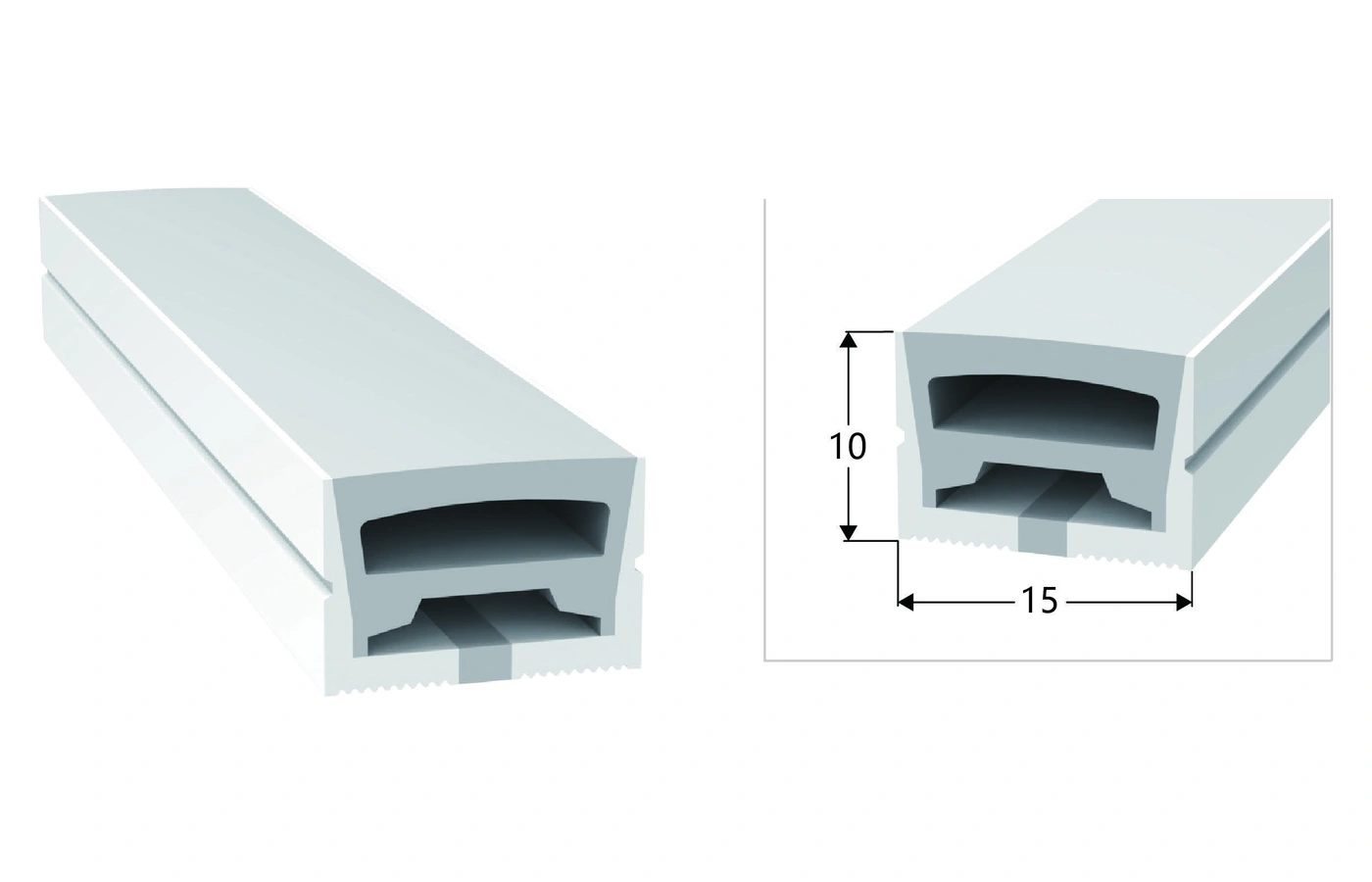
Catalogue page 12, profile 4
Review catalogue row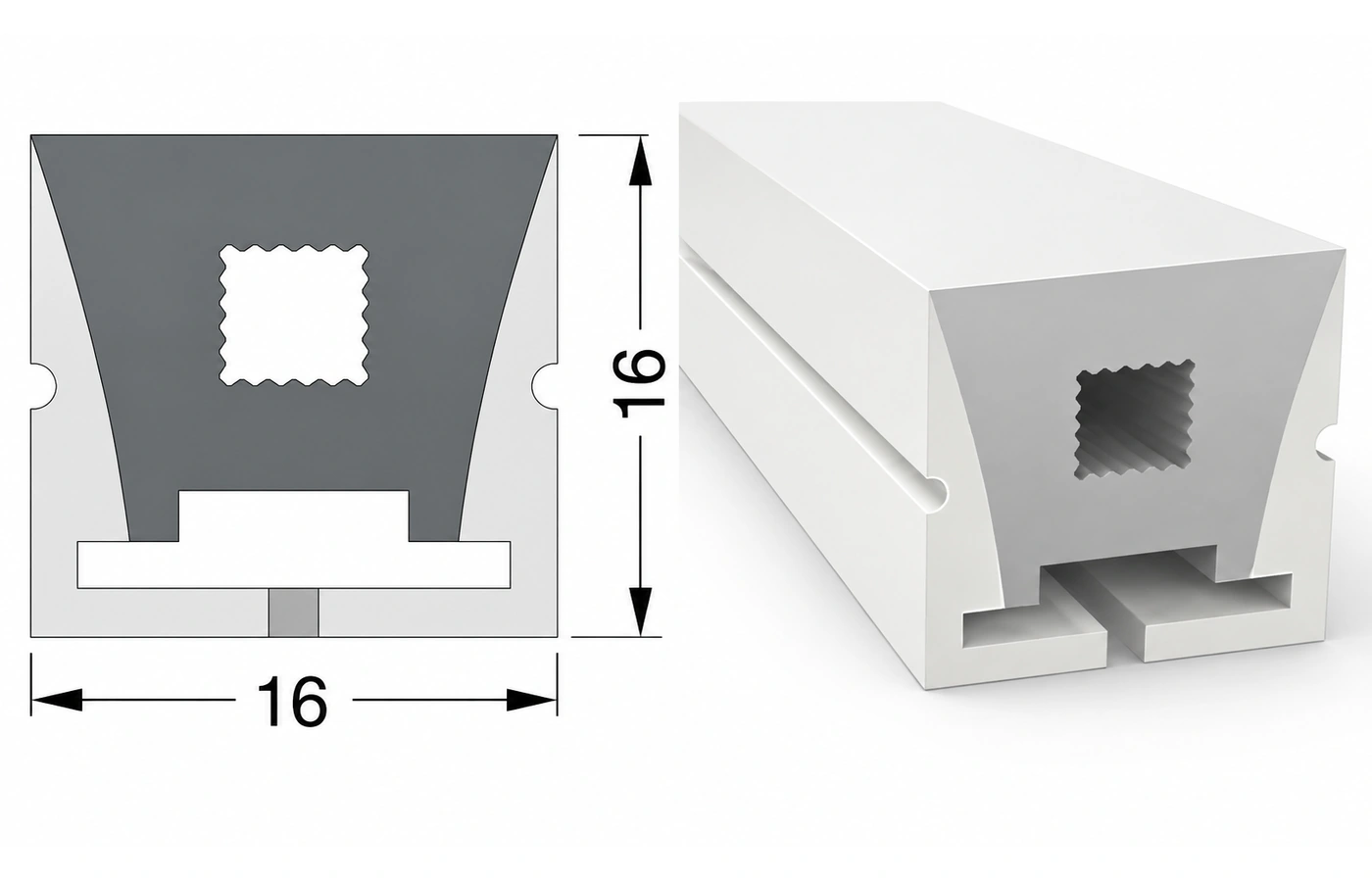
Illustrative rendering; confirm internal details with the selected sample.
Catalogue page 12, profile 5
Review catalogue row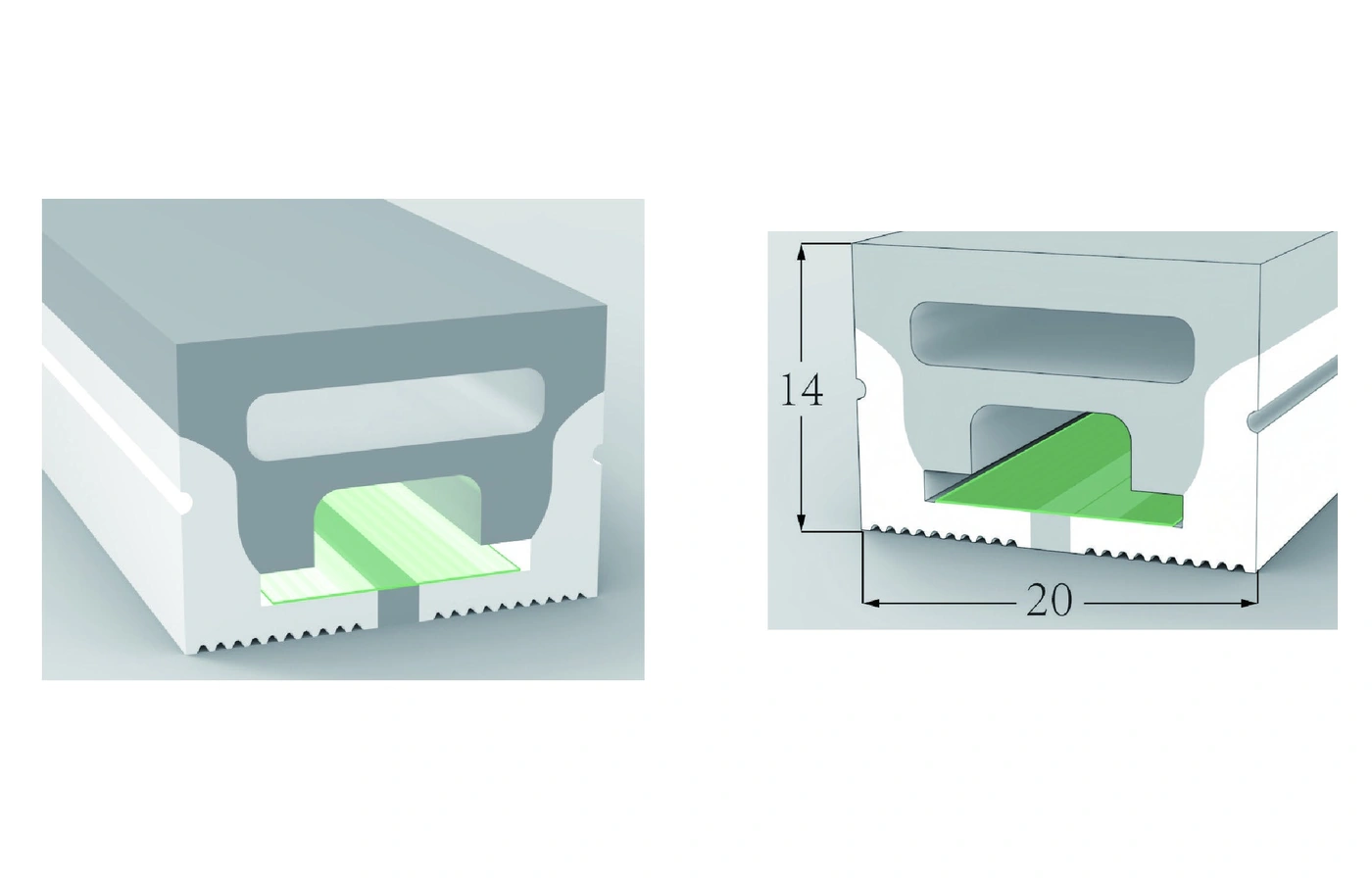
Catalogue page 12, profile 6
Review catalogue row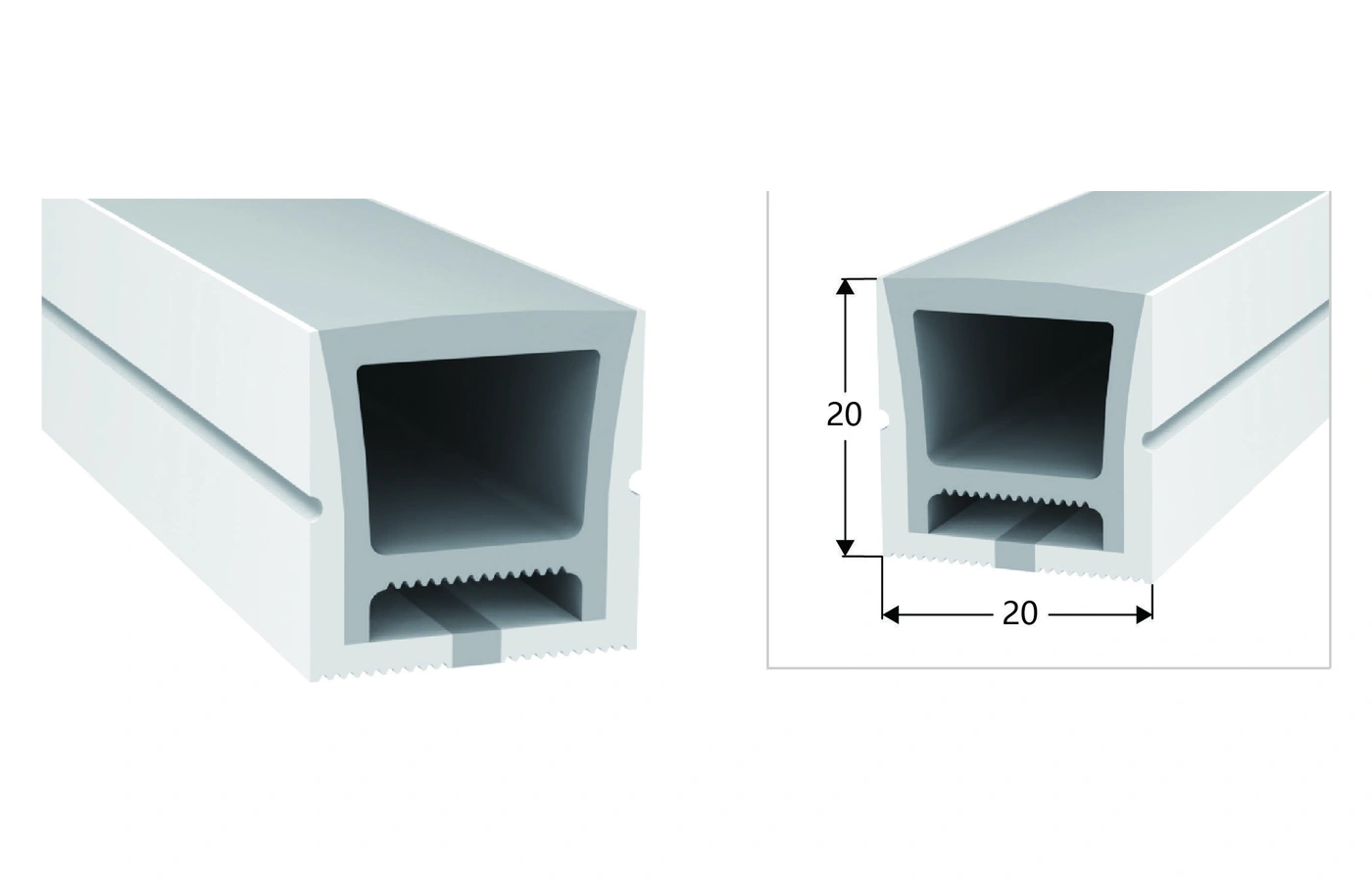
Catalogue page 12, profile 7
Review catalogue row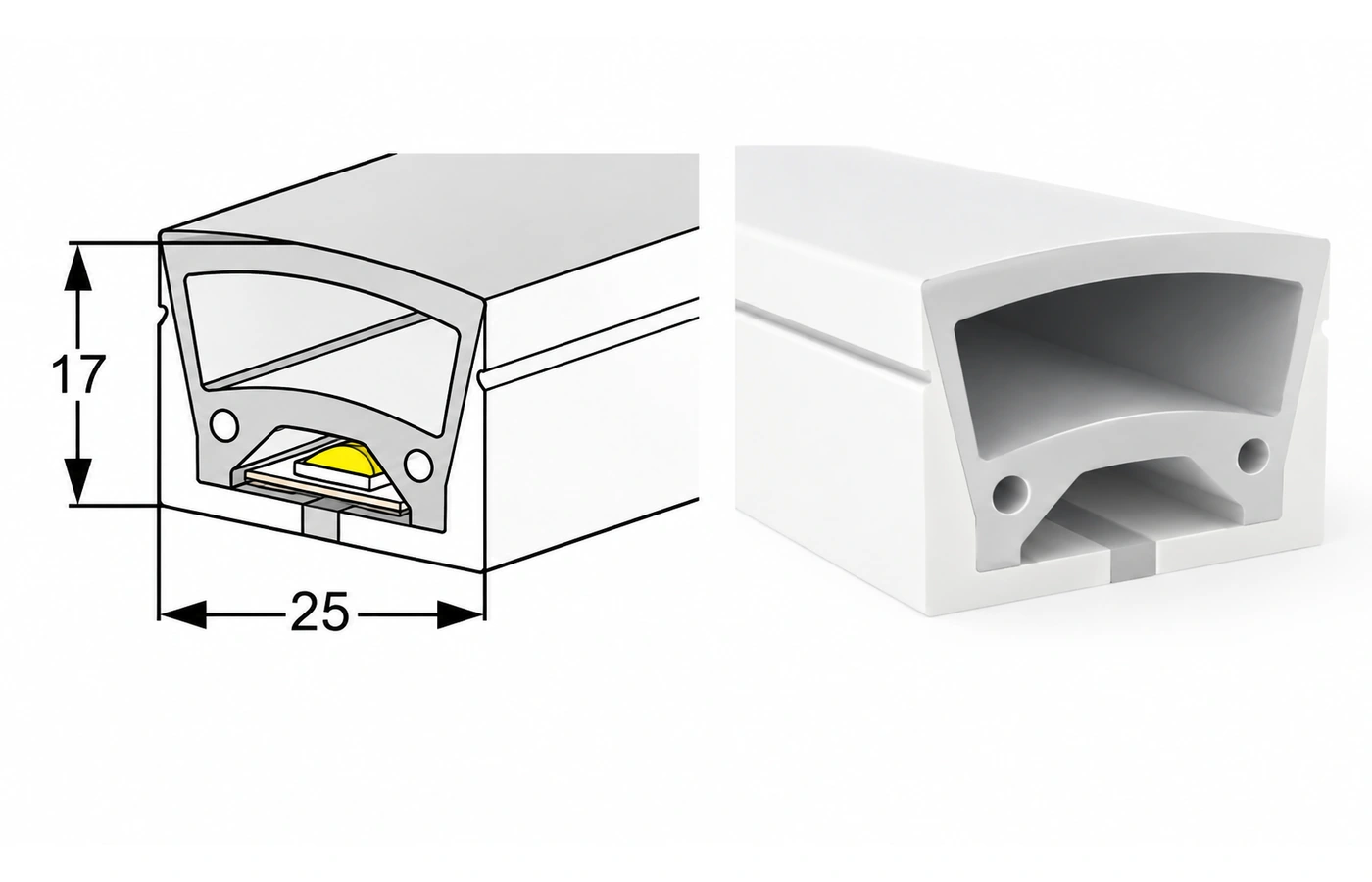
Illustrative rendering; confirm internal details with the selected sample.
Catalogue page 12, profile 8
Review catalogue rowChoose the geometry first, then compare the configuration rows for that profile. Voltage, power, luminous flux and cut length are not interchangeable across variants.
For RGB LED neon flex, compare the control arrangement as well as the visible face. The 10 x 10 mm profile below lists 24 V single-colour, tunable-white and RGB options. The 12 x 12 mm profile lists 24 V single-colour and RGB options plus a separate 12 V Pixel RGB configuration. A top-emitting surface does not determine the supply voltage or bending plane.
10 x 10 mm · Top-Emitting LED Neon Flex
24 V single-colour, tunable-white and RGB configurations
View profile & configurations12 x 12 mm · Top-Emitting LED Neon Flex
24 V single-colour and RGB; 12 V Pixel RGB
Compare 24 V and 12 V configurationsShare the installation section, intended viewing position, light appearance and cable route.
Explore the applicationShare the installation section, intended viewing position, light appearance and cable route.
Explore the applicationShare the installation section, intended viewing position, light appearance and cable route.
Explore the applicationEnd caps, cable exits, rigid aluminum profiles and bendable supports are selected around the actual section. Accessory compatibility should be confirmed against the selected profile before quotation.
Use the exact profile and configuration when discussing your project. The International Catalogue contains the complete model rows; accessory documents support a separate fit review.
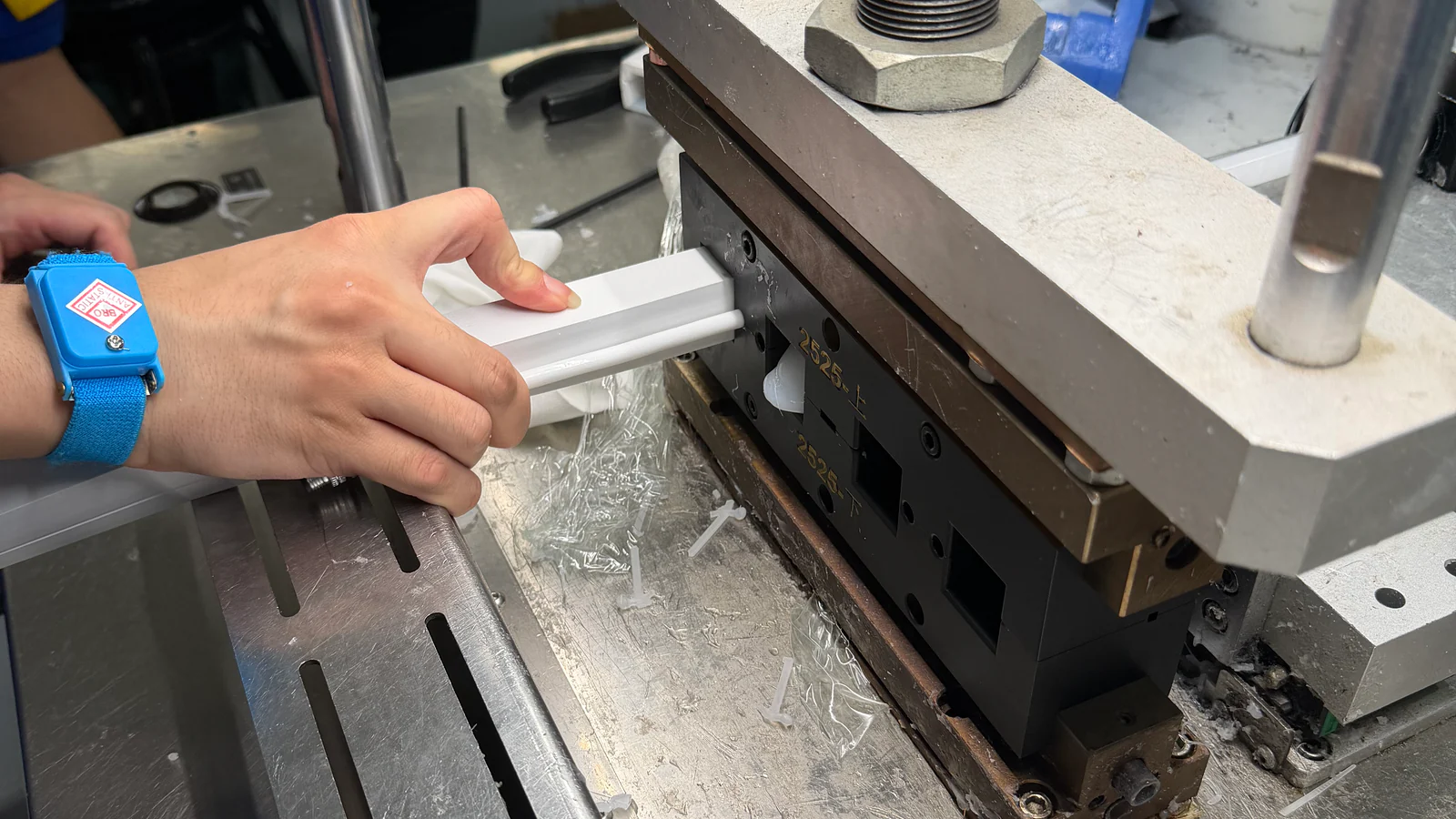
Start with a catalogue profile when its section fits. If the groove, emitting face, strip space or end interface needs a different geometry, send a drawing, installation sketch or physical sample for custom silicone extrusion review.
Compare three light-source configurations and mounting details.
View Profile & SpecificationsCompare three light-source configurations and mounting details.
View Profile & SpecificationsCompare three light-source configurations and mounting details.
View Profile & SpecificationsCompare three light-source configurations and mounting details.
View Profile & Specifications
Send the profile size, required light appearance, installation route and quantity. We will review the exact configuration and mounting details.
PROJECT ENQUIRY
Leave your contact details and a short project note. We will follow up with you.